
 Image 1 of 1
More Info:
Dimensions: 8000 x 5882 px
Location: Small Stream Near Telluride Colorado
Note: This image is exclusive to this site.
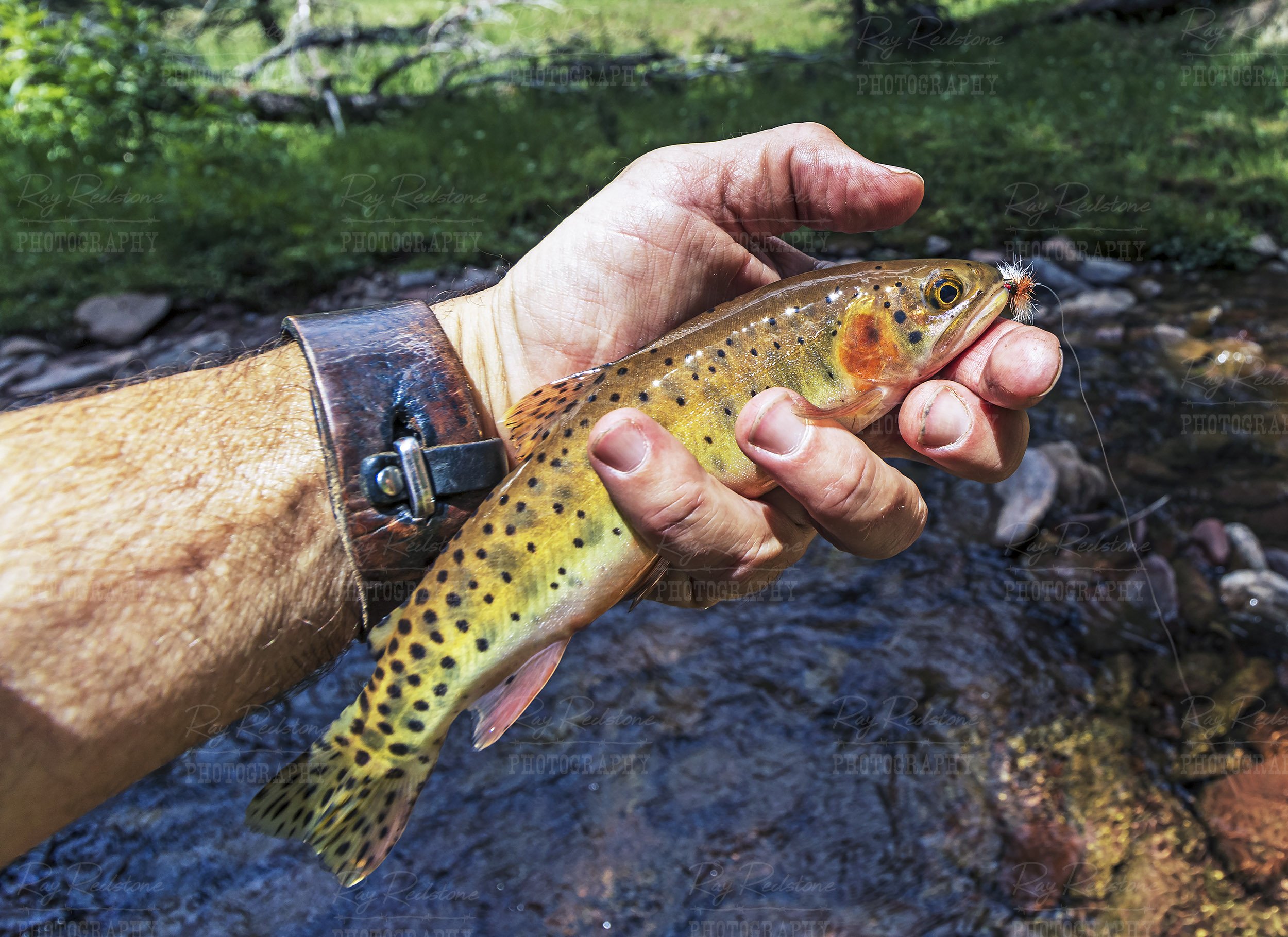
A Colorful Colorado Cutthroat Trout Caught (and released) Dry Fly Fishing On a Small Stream near Rico & Dolores Colorado.
Colorado Cutthroat Trout (Oncorhynchus clarkii pleuriticus)
Native cutthroat subspecies: olive to greenish-brown back, lighter sides, cream to yellow belly, with red-orange jaw slash and dark spots toward the tail.
Size: 6–16 inches in streams; can exceed 18 inches in lakes/well-managed waters.
Range & habitat: Historically widespread in Colorado basins; now mainly in high-elevation streams, small rivers, and isolated headwaters—cold, clear, oxygen-rich water with gravel/rock substrate.
Diet: Aquatic/terrestrial insects, crustaceans, small fish, fish eggs; seasonally opportunistic.
Life history: Mostly stream-resident; some use lakes or larger rivers. Spawn spring–early summer; females dig gravel redds.
Conservation: Declined from habitat loss, water diversion, overfishing, and hybridization with nonnative trout. Recovery via habitat restoration, nonnative control, reintroduction, and protective regulations.
Angling: Managed with conservation rules (catch-and-release or limits). Fish restored or remote waters and follow local regulations.
A Colorful Colorado Cutthroat Trout Caught (and released) Dry Fly Fishing On a Small Stream near Rico & Dolores Colorado.
Colorado Cutthroat Trout (Oncorhynchus clarkii pleuriticus)
Native cutthroat subspecies: olive to greenish-brown back, lighter sides, cream to yellow belly, with red-orange jaw slash and dark spots toward the tail.
Size: 6–16 inches in streams; can exceed 18 inches in lakes/well-managed waters.
Range & habitat: Historically widespread in Colorado basins; now mainly in high-elevation streams, small rivers, and isolated headwaters—cold, clear, oxygen-rich water with gravel/rock substrate.
Diet: Aquatic/terrestrial insects, crustaceans, small fish, fish eggs; seasonally opportunistic.
Life history: Mostly stream-resident; some use lakes or larger rivers. Spawn spring–early summer; females dig gravel redds.
Conservation: Declined from habitat loss, water diversion, overfishing, and hybridization with nonnative trout. Recovery via habitat restoration, nonnative control, reintroduction, and protective regulations.
Angling: Managed with conservation rules (catch-and-release or limits). Fish restored or remote waters and follow local regulations.
Dimensions: 8000 x 5882 px
Location: Small Stream Near Telluride Colorado
Note: This image is exclusive to this site.