
 Image 1 of 1
More Info:
Image Dimensions: 11000 × 6187 Pixels
Location: Tonto National Forest
Note: This image is exclusive to this site. © 2026 Ray Redstone
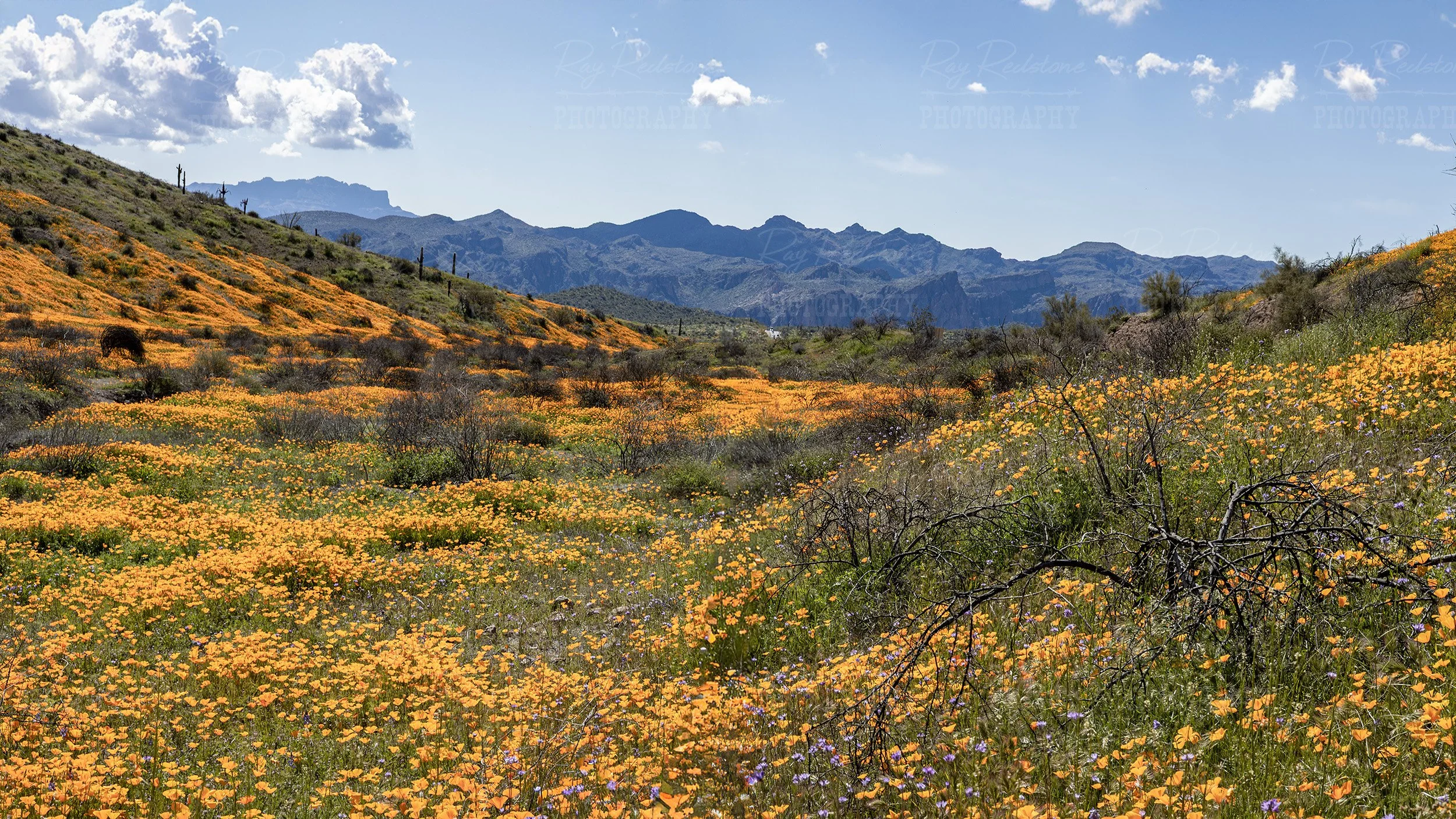
Captured in the Tonto National Forest in Arizona during the Spring of 2023, this wide ratio image features a desert valley filled with vibrant and gold colored super bloom wildflowers like Mexican Poppies. Ideal Image for Arizona Spring wall art and prints.
Super Bloom Fun Facts:
Super blooms occur after above-average winter and early-spring rainfall, often following a wet El Niño season.
They are most common in desert regions of southern and central Arizona, including Sonoran Desert areas near Phoenix, Tucson, and Organ Pipe Cactus National Monument.
Native wildflower species include desert sand verbena, poppies (e.g., California poppy), lupine, brittlebush, and desert marigold.
Timing typically ranges from late February through April, but exact peak depends on elevation and yearly weather patterns.
Cooler nighttime temperatures during germination and early growth improve survival and floral displays.
Seed banks in desert soils can remain dormant for years, waiting for the right combination of moisture and temperature to trigger germination.
Super blooms are ecologically important: they provide nectar and pollen for pollinators (bees, butterflies, hummingbirds) and food resources for desert wildlife.
Human impact—foot traffic, off-road vehicles, and collection of plants—can damage fragile blooms and soil crusts; staying on established trails helps protect them.
Photography and visitation are popular during super blooms; arrive early to avoid crowds and to reduce trampling of plants.
Captured in the Tonto National Forest in Arizona during the Spring of 2023, this wide ratio image features a desert valley filled with vibrant and gold colored super bloom wildflowers like Mexican Poppies. Ideal Image for Arizona Spring wall art and prints.
Super Bloom Fun Facts:
Super blooms occur after above-average winter and early-spring rainfall, often following a wet El Niño season.
They are most common in desert regions of southern and central Arizona, including Sonoran Desert areas near Phoenix, Tucson, and Organ Pipe Cactus National Monument.
Native wildflower species include desert sand verbena, poppies (e.g., California poppy), lupine, brittlebush, and desert marigold.
Timing typically ranges from late February through April, but exact peak depends on elevation and yearly weather patterns.
Cooler nighttime temperatures during germination and early growth improve survival and floral displays.
Seed banks in desert soils can remain dormant for years, waiting for the right combination of moisture and temperature to trigger germination.
Super blooms are ecologically important: they provide nectar and pollen for pollinators (bees, butterflies, hummingbirds) and food resources for desert wildlife.
Human impact—foot traffic, off-road vehicles, and collection of plants—can damage fragile blooms and soil crusts; staying on established trails helps protect them.
Photography and visitation are popular during super blooms; arrive early to avoid crowds and to reduce trampling of plants.
Image Dimensions: 11000 × 6187 Pixels
Location: Tonto National Forest
Note: This image is exclusive to this site. © 2026 Ray Redstone