
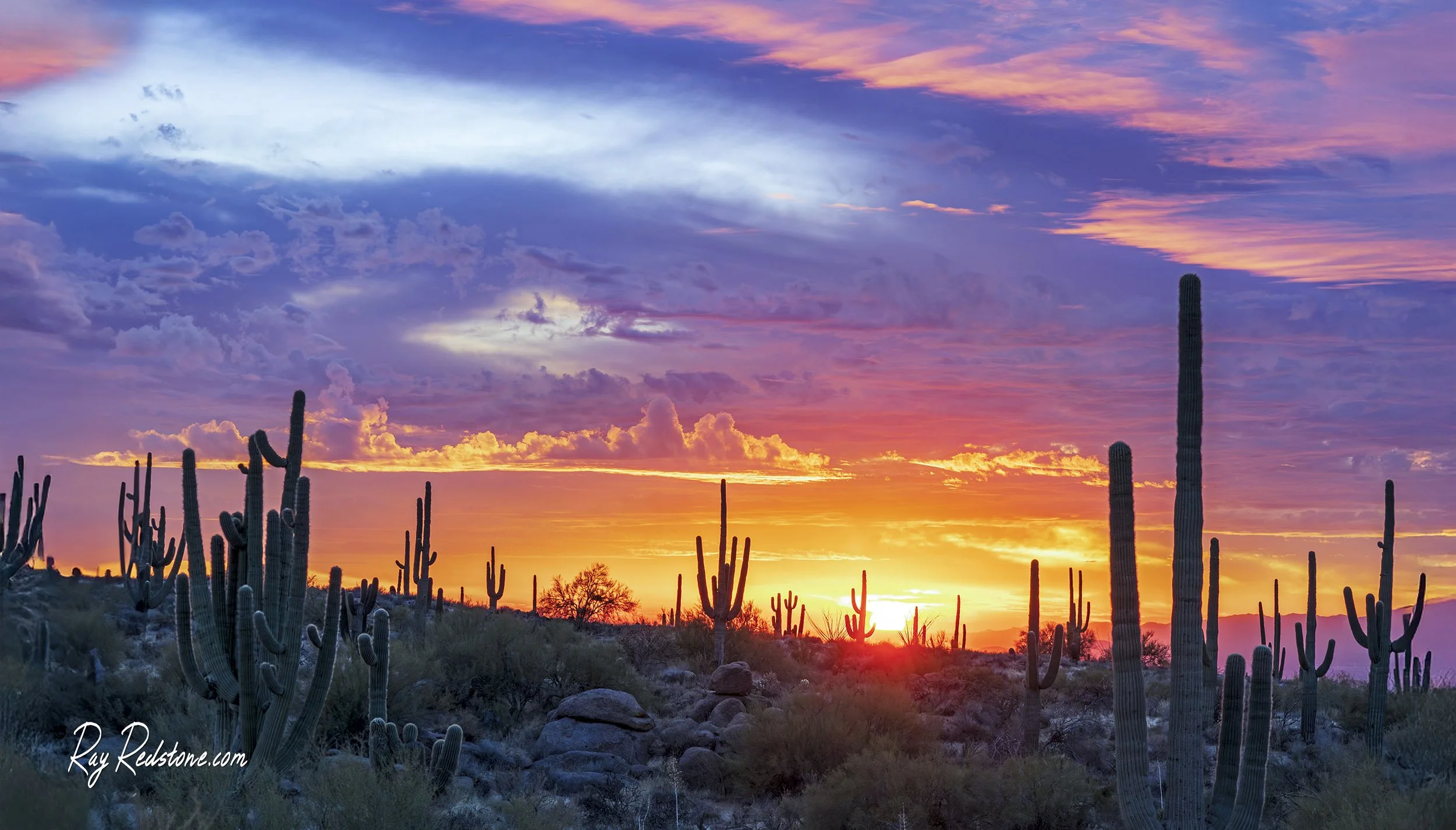
Panoramic Desert Sunset In Scottsdale AZ

$22.99

This is a vibrant wide ratio or panoramic desert sunset captured in a Sonoran desert preserve in North Scottsdale, AZ. This wide ratio high resolution photo is ideal for a high quality canvas print or wall art.

The Sonoran Desert spans ~100,000 sq mi across SW Arizona, SE California, and parts of Sonora and Baja California. In Arizona it includes Phoenix, Tucson, Saguaro National Park, and Organ Pipe Cactus National Monument. It’s among North America’s hottest and most biodiverse deserts, richer in species than the Mojave or Chihuahuan. Key plants: saguaro (Carnegiea gigantea, found only here), palo verde, creosote, ocotillo, and many columnar/barrel cacti. Two rainy seasons occur: winter Pacific storms and the summer monsoon (July–September). Wildlife includes javelina, desert bighorn, Gila monsters, coyotes, kit foxes, many bats, Gambel’s quail, and Gila woodpeckers. Flora and fauna show adaptations to heat, drought, and flash floods (water storage, nocturnality, deep/widespread roots). Human history spans Indigenous peoples (e.g., Tohono O’odham), Spanish missions, ranching, mining, and modern cities; water use and habitat fragmentation are key conservation issues. Invasive grasses have increased fire frequency, harming non–fire-adapted natives. Conservation focuses on habitat protection, invasive control, sustainable water use, and wildlife corridors.

This is a vibrant wide ratio or panoramic desert sunset captured in a Sonoran desert preserve in North Scottsdale, AZ. This wide ratio high resolution photo is ideal for a high quality canvas print or wall art.

The Sonoran Desert spans ~100,000 sq mi across SW Arizona, SE California, and parts of Sonora and Baja California. In Arizona it includes Phoenix, Tucson, Saguaro National Park, and Organ Pipe Cactus National Monument. It’s among North America’s hottest and most biodiverse deserts, richer in species than the Mojave or Chihuahuan. Key plants: saguaro (Carnegiea gigantea, found only here), palo verde, creosote, ocotillo, and many columnar/barrel cacti. Two rainy seasons occur: winter Pacific storms and the summer monsoon (July–September). Wildlife includes javelina, desert bighorn, Gila monsters, coyotes, kit foxes, many bats, Gambel’s quail, and Gila woodpeckers. Flora and fauna show adaptations to heat, drought, and flash floods (water storage, nocturnality, deep/widespread roots). Human history spans Indigenous peoples (e.g., Tohono O’odham), Spanish missions, ranching, mining, and modern cities; water use and habitat fragmentation are key conservation issues. Invasive grasses have increased fire frequency, harming non–fire-adapted natives. Conservation focuses on habitat protection, invasive control, sustainable water use, and wildlife corridors.

More Info:

Image Dimensions: 9000 x 5130 px (wide ratio)

Location: Scottsdale, AZ.

Note: This image is exclusive to this site. © 2023 Ray Redstone